


If the previous sections showed that the Game Architecture itself is born from a Single Source and then unfolds through duality, the triad, and balance, we now arrive at the following conclusion: the central figures of power are not independent entities. They do not arise separately from the Game and do not exist outside of it. On the contrary, they are its most visible carriers and, at the same time, its living mirrors.
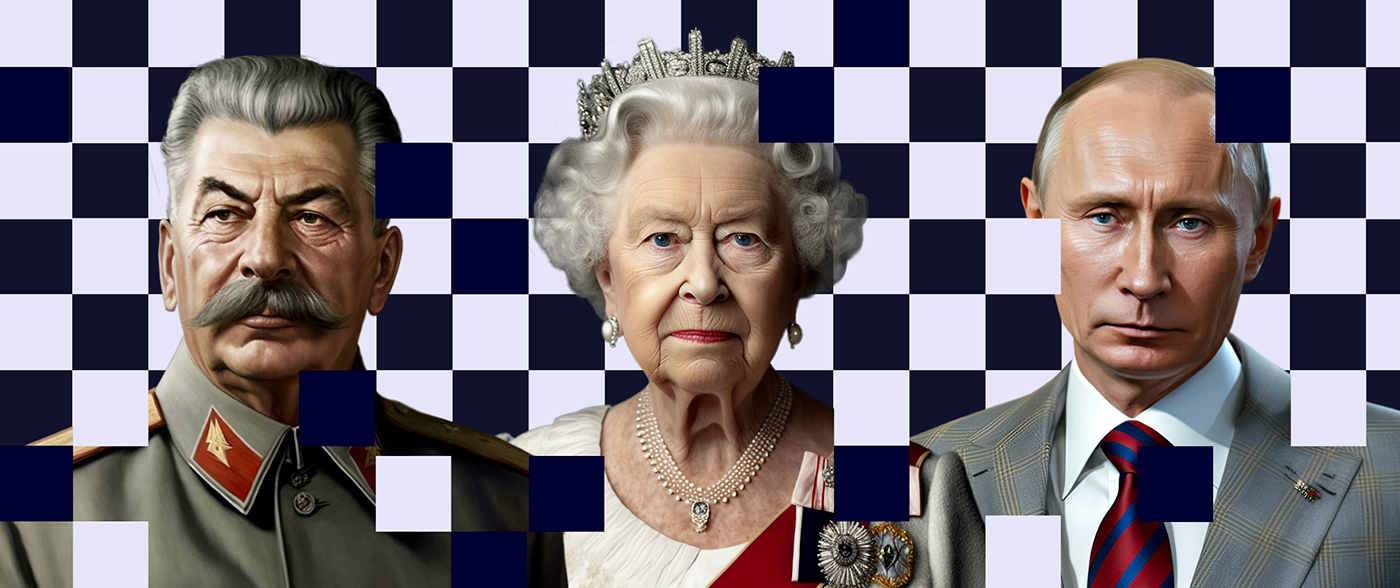
Presidents, pharaohs, sheikhs, kings, emperors — these are not merely different historical titles. They are different cultural forms of the same function. One function — different masks.
The language changes, the setting changes, the religious veneer changes, the legal form changes, but the principle remains the same. Within the Game, these figures perform the same task: they anchor the center, maintain the vertical axis, embody order, and serve as the visible apex of the system. This is precisely why they can be viewed as mirror images of a single archetype.
It is important to understand: these figures are not autonomous. Their status is not a free gift of the individual, but rather a product and consequence of the Game itself. They do not stand above the system in the simple sense. They are embedded in it more deeply than anyone else, because it is precisely through them that the Game becomes visible, recognizable, and controllable. The higher a figure is in the hierarchy, the greater their dependence on the overall mechanism. A higher position does not free one from the Game; on the contrary, it makes a person its most captive hostage.
This is the key point. The central player is no freer than the rest, but is more constrained by their own role. They are obligated to fulfill their function because everyone else is watching them. Their behavior becomes the standard, their gestures the norm, their image a model mirrored by the lower levels. This is how a chain of inheritance is formed: not only of power, but also of the script, the symbol, and the way of life.
Therefore, the figures at the top of Alpha should be understood not as separate biographies, but as fragments of a single architecture, distributed across different eras and cultures. The same principle can take the form of a pharaoh, then a king, then a president or a sheikh, but the internal logic remains the same: one center, one vertical axis, one function of keeping the world within the framework of the Game.
Alpha’s Expansion: The Budding of Zones and the Birth of Local Mirrors
Here it is especially important to recognize another mechanism: the Game not only preserves itself at the top but also multiplies its leading figures through the division of territories. When an old empire or colonial system collapses, it does not disappear as a mechanism. It simply buds, fragmenting into new Game zones where new bearers of the same function emerge.
This is precisely why the division of lands and empires is so important. It shows that new power is not a new core, but a local mirror of the former center.
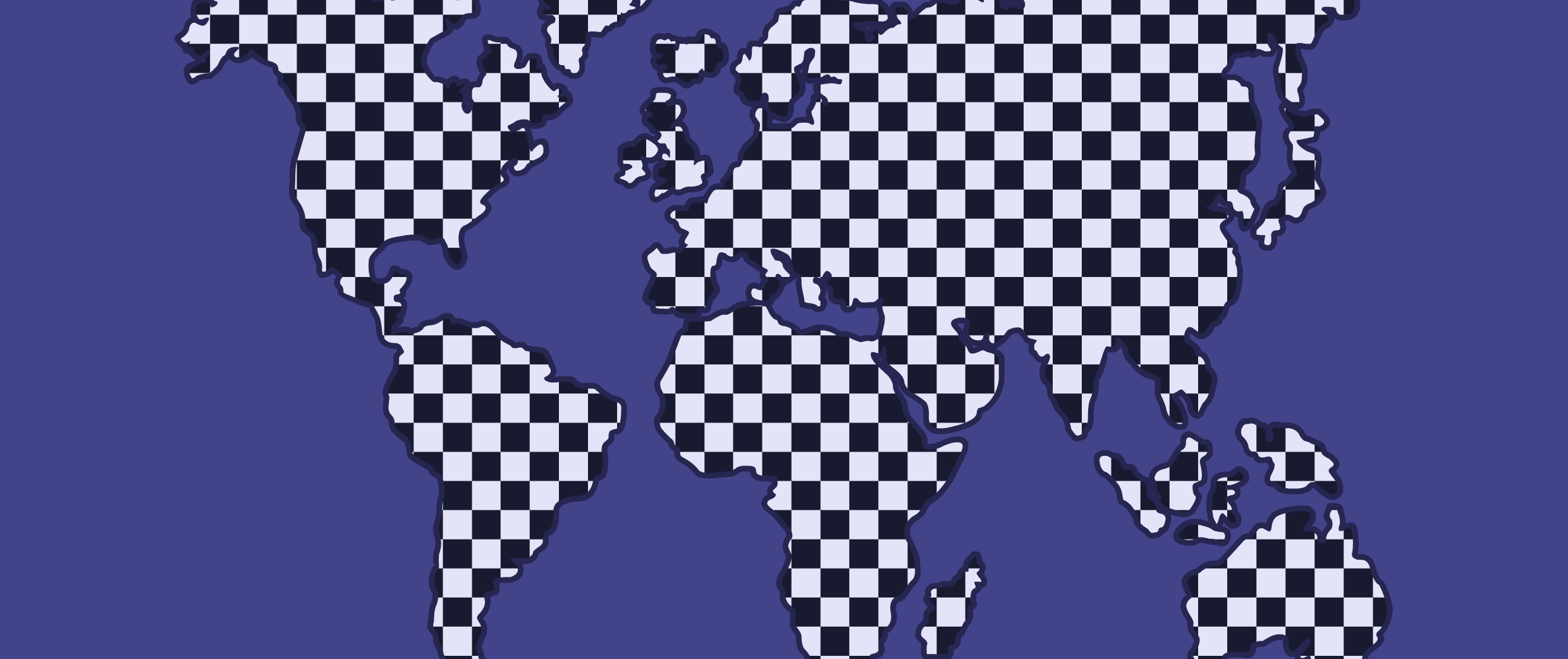
This was the case, for example, with the division of the Americas by European empires: Spanish, Portuguese, British, French, and Dutch expansion did not create a “new logic”, but rather transferred an existing architecture to a new continent. Then these zones broke apart further — and in place of the former colonial entities, new states emerged with new leaders, who once again merely repackaged the original model.
The same pattern is evident in China: periods of disintegration and division into kingdoms, dynasties, and north-south configurations repeatedly demonstrate the same truth — power does not disappear but flows; a unified body fragments, yet each fragment reproduces the original form of the center.
The same pattern is evident in the history of Rome, the Carolingian world, the Ottoman Empire, British India, Yugoslavia, the USSR, and countless other regions: first a unified zone, then division, then the emergence of new centers, new masks, and new leaders. Outwardly, this looks like the birth of new states. In essence, it is the mirror-like branching of the same Game.
This is precisely why the leaders of different countries, despite all apparent differences, are fundamentally mirrors of one another: they repeat the same structural gesture, the same function, and the same dependence on the Game. They do not create the system anew — they inherit it, rebrand it, and carry it forward.
Their lives have meaning only within the Game. Outside of it, they lose not only their throne, position, or status, but also the very foundation of their existence within the system. Without the Game, they cease to be who they are. This is precisely why the Alpha elite cannot simply “step out” of the Game: they are an organic part of it. The figure, the mask, and the function have become so intertwined that it is no longer possible to separate one from the other.
Thus, when we look at world leaders, we should not see “great men”, but rather functionaries of a single Game system — mirrors that reflect the same architecture in different settings. Their differences are secondary. Their structural identity is primary. They are one and the same.
They are not the masters of the Game. They are its most vivid and, at the same time, most dependent mirrors.