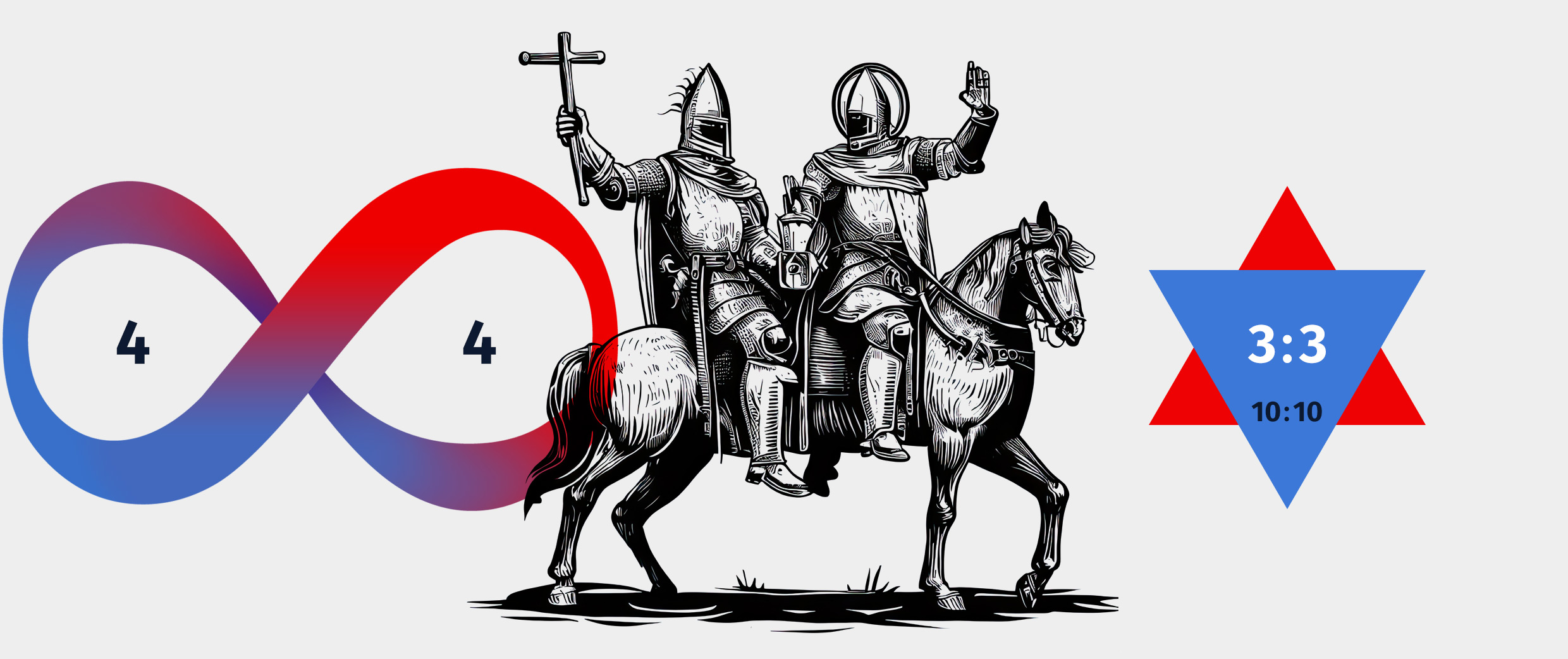



While in the ancient realms of the Game its mechanics manifested through kings, temples, the calendar, war, and symbols, in the modern era the same structure has simply taken on new forms. Cryptocurrencies, artificial intelligence, and the media environment are not separate worlds, but modern fractal forms of the same Game. Here, the single core does not disappear; on the contrary, it begins to multiply particularly rapidly: into tens, hundreds, and thousands of variations, creating the appearance of choice, diversity, and freedom.
It is important to note right away: in the 4th section of the current chapter, we have already demonstrated the basic principle of the Single Source and the binary logic from which the multitude arises. Here, however, we are not talking about the very foundation itself, but about how this foundation behaves in the modern world — in an accelerated, technologically advanced, and extremely visible form.
It is important to note right away: in the 4th section of the current chapter, we have already demonstrated the basic principle of the Single Source and the binary logic from which the multitude arises. Here, however, we are not talking about the very foundation itself, but about how this foundation behaves in the modern world — in an accelerated, technologically advanced, and extremely visible form.
Cryptocurrency as a fractal copy of the same bet
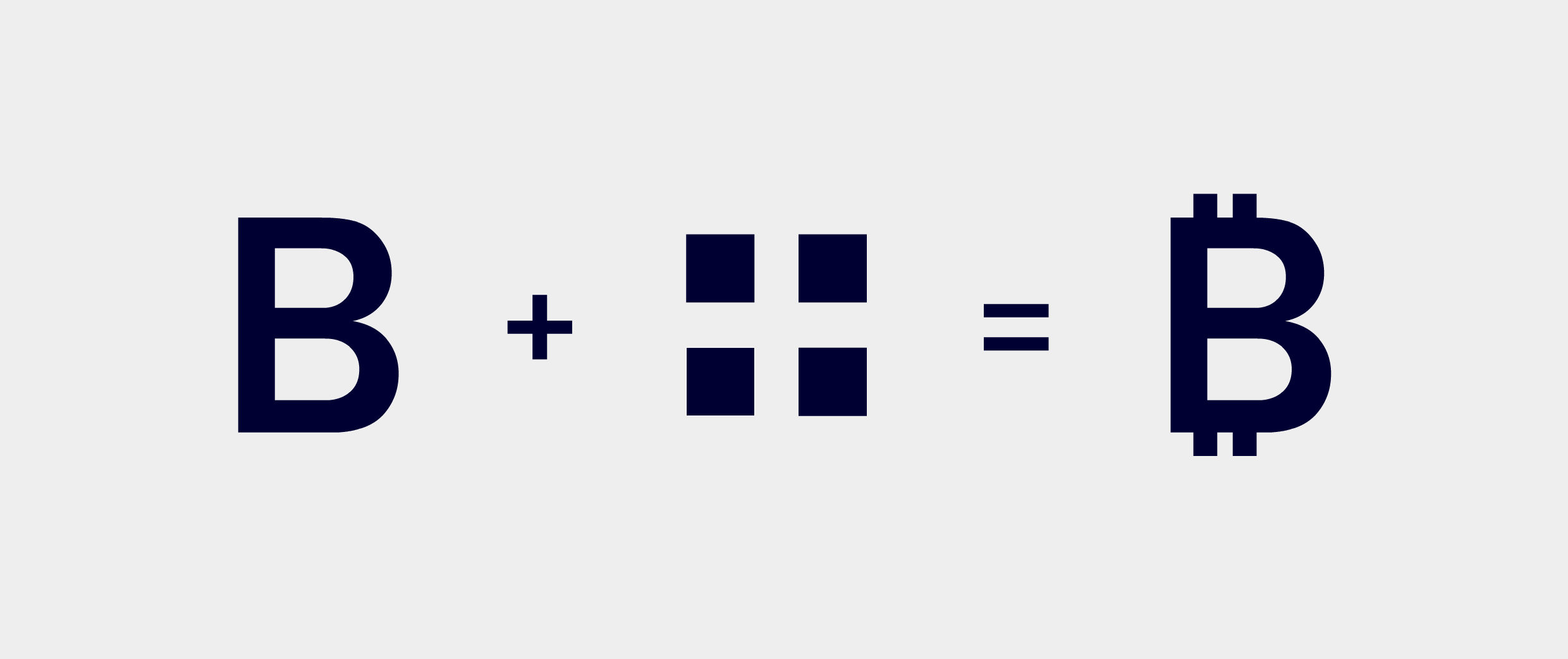
Illustration. Design scheme for the Bitcoin symbol. This is a classic technique with the addition of a “2:2” pattern, which is similarly applied in the dollar symbol. A synonym for this concept is two vertical lines.
Cryptocurrencies demonstrate this with extreme clarity. On the surface, it seems we are faced with a multitude of independent projects competing with one another for attention, capital, and trust. But if we look deeper, the structure repeats itself: digital value, belief in scarcity, a trust infrastructure, speculative energy, and the struggle for standard status. Bitcoin, Ethereum, XRP, Litecoin, and dozens of other currencies are not different Games, but variations of a single dominant architecture. Names change, symbols change, fans and ideologies change, but the form of the Game itself remains the same.
Competition here is not a flaw in the system, but an essential element of it. It creates the illusion of choice while simultaneously accelerating the spread of the Game. Formally independent projects turn out to be mirror cells of a single structure.
A single core begins to break down into a multitude of mirror copies, each of which claims its own uniqueness but functions according to a common logic. Here it is particularly clear how the Game is capable of creating not just alternatives, but entire ecosystems of pseudo-differences.
Next, the Game begins to automatically clone and expand itself: equipment, mining, professions, exchanges, the legal framework, education, and the mythology of the “new economy”. Each of these areas is a separate Game, but all are subsidiary reflections of the original model.
Players may argue among themselves, but in reality, they all serve the same principle: capturing attention, distributing trust, and competing for the center.
AI as an accelerator of mirroring
The same thing happens with artificial intelligence. Here, a single idea — an autonomous computational mind — instantly generates an entire system of variations: models, platforms, interfaces, architectures, companies, schools, fears, and expectations. Each new version of AI appears as a separate force, but is essentially a continuation of the same game turn.
AI is particularly important as a modern example because it does not merely reflect the Game, but accelerates it. It makes duplication faster, denser, and more extensive. The world begins to multiply its own reflection, and this multiplication itself becomes part of the Game. AI is not just a technology. It is a new environment in which the Game structure learns to reproduce itself at an even greater speed.
Here it is particularly evident: the more complex the system, the easier it is for it to create the illusion of autonomy. But at its core remains the same principle — a single nucleus branching out into many forms that compete, adapt, and converge once again into a common logic.
Media as a machine of endless replication
Media operates on the same formula. News cycles, social media, news hooks, bloggers, platforms, streams, short videos, memes — all of this is not chaos, but a fractal environment where the same mechanics repeat themselves in an infinite number of forms. Attention is fragmented, copied, redistributed, and gathered back into the center.
A single event instantly transforms into dozens of interpretations, and a single figure into a multitude of mirror images. The media not only reflects the Game but also accelerates its replication. It makes visible what was once distributed across time and space, and now emerges almost simultaneously, in real time and on a massive scale.
Therefore, the modern media world demonstrates particularly well that fractal multiplication is not a side effect, but the basic mode of the Game. A single event gives rise to a multitude of versions. A multitude of versions argue among themselves. The argument creates a sense of movement. But in reality, everything continues to reproduce the same architecture in new guises.
The General Formula of Modernity
If we look at crypto, AI, and media together, the main point becomes clear:
- modernity has not abolished ancient mechanics, but has merely made them faster and denser.
A single core generates variations.
Variations compete.
Competition creates the illusion of freedom.
But in reality, everything continues to reproduce the same structure in new forms.
This is the significance of this section: it confirms that the mechanism we observed in antiquity has not disappeared, but has simply changed its vehicles. Cryptocurrency, AI, and the media are modern proof that the Game still operates today according to the same principle: the one gives rise to the many, and the many return to the one.
This is precisely why the modern world does not disprove the Game; on the contrary, it makes it even more evident.