


To understand mirroring as a mechanism, we must first return to the source — to where Game architecture first took on a stable, reproducible form. That point was Mesopotamia.
This is not “one of the ancient civilizations”, but specifically the origin point of the systemic Game on Earth. It was here that all the basic elements first emerged, elements that would later be repeated in various forms: sedentary life, control over time, resource distribution, the emergence of a ruling class, the symbolic legitimization of power, the sacralization of order, and the creation of the first boundaries of Game zones.
Prior to Mesopotamia, humanity existed primarily in a scattered, nomadic, or semi-sedentary state. Here, however, a qualitative leap occurs: space and time begin to be organized, measured, and controlled. The possibility of accumulation, planning, division of roles, and the establishment of order emerged. It is precisely this transition that transforms the environment into a Playground.
The Moon became the key celestial body for early Mesopotamia. And this is no coincidence.
Unlike the continuous and blinding Sun, the Moon demonstrated a visible cycle: birth, growth, full moon, waning, disappearance, and rebirth. It was the ideal natural teacher of rhythm. Ancient people observed how the Moon divided time into phases and began to synchronize their lives — sowing, harvesting, rituals, and waiting — with these phases.
It was the Moon that first made time visible.
This is not “one of the ancient civilizations”, but specifically the origin point of the systemic Game on Earth. It was here that all the basic elements first emerged, elements that would later be repeated in various forms: sedentary life, control over time, resource distribution, the emergence of a ruling class, the symbolic legitimization of power, the sacralization of order, and the creation of the first boundaries of Game zones.
Prior to Mesopotamia, humanity existed primarily in a scattered, nomadic, or semi-sedentary state. Here, however, a qualitative leap occurs: space and time begin to be organized, measured, and controlled. The possibility of accumulation, planning, division of roles, and the establishment of order emerged. It is precisely this transition that transforms the environment into a Playground.
The Moon as the Primary Symbol of Cycle and Measurement
The Moon became the key celestial body for early Mesopotamia. And this is no coincidence.
Unlike the continuous and blinding Sun, the Moon demonstrated a visible cycle: birth, growth, full moon, waning, disappearance, and rebirth. It was the ideal natural teacher of rhythm. Ancient people observed how the Moon divided time into phases and began to synchronize their lives — sowing, harvesting, rituals, and waiting — with these phases.
It was the Moon that first made time visible.
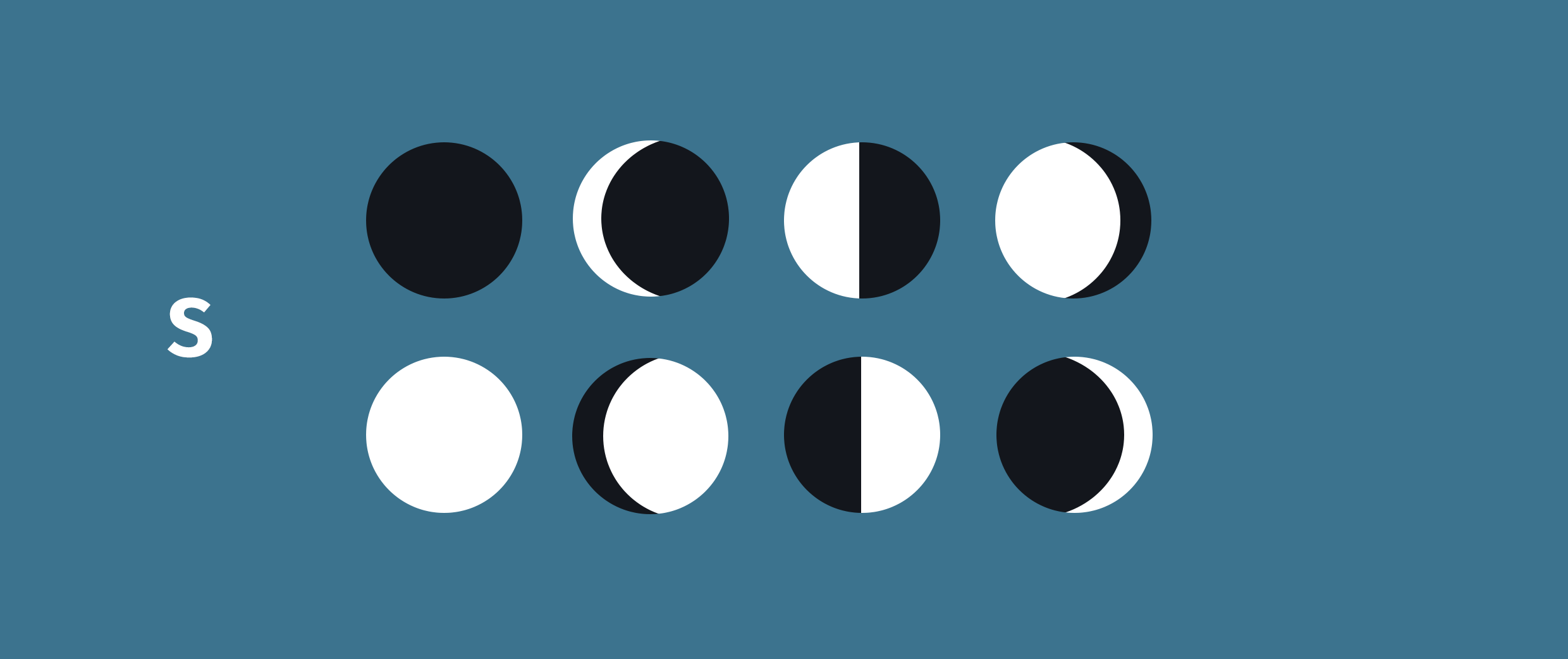
Illustration.
The sequential changes in the visible Moon in the sky as observed from the Southern Hemisphere.
The Sun gives life, but the Moon makes life measurable. Through observing the lunar phases, humans began to link celestial cycles with life on Earth: sowing, harvesting, waiting for rain, the changing of the seasons, and the repetition of nature’s rhythm. It is in the connection between the Moon and the Sun that the calendar emerges — and with it, the very possibility of organizing life.
From this arises the number 12 — as an early form of marking the cycle. Twelve months become not just a convenient counting system, but the first stable framework for dividing time. And the moment time begins to be divided, measured, and calculated, the very possibility of control emerges. Whoever controls the cycle controls labor, the distribution of resources, ritual, expectation, and order.
This is precisely why the calendar, record-keeping, writing, law, and authority emerge here not as separate achievements, but as parts of a single mechanism. The Moon provides the rhythm, the Sun provides the life force, and together they form the first Game structure: cycle, repetition, transition, return, and control over the phases.
Mirroring as the natural logic of the ancient world
But something else is even more important.
It is here, in Mesopotamia, that the first stable logic of mirroring is born.
Ancient people constantly observed the world as a system of reflections and opposites. The Moon never appeared unchanging: it would be illuminated on one side, then the other; it would vanish into darkness, then become a full white form. The Sun operated by the same logic: sunrise mirrored sunset, day mirrored night, light mirrored shadow.
Water intensified this perception even further. In the reflection, people saw a doubling of the world: the sky below, the earth above, light in the depths of the water. Rain, evaporation, and the return of water from the sky back to the earth created a sense of a closed cycle. Nature as a whole functions as a repeating system of phases: tides, seasons, birth and death, growth and decay.
For ancient humans, this was not a poetic metaphor. It was the very mechanics of the world as observed.
This is precisely why mirroring arises not as an abstract philosophy, but as a natural way of understanding reality and interpreting it. The world begins to be perceived through pairs and opposites: top and bottom, light and darkness, white and black, the manifest and the hidden, life and death.
This is how the primary Game Scheme is formed.
Later, all subsequent game constructs will grow out of this very scheme: duality, the triad, the arc, balance, mirrored sides, cyclical repetition, and the principle of holding opposites.
The Early Triad and Symbolic Architecture
It is particularly important that the early triadic model of the world emerges here. Above the earth lies the bright celestial pole. Beneath the earth lies the dark, hidden, mirror pole. Between them lies the earthly center — the space of humanity, ritual, power, and action. In other words, the very structure of the world begins to be perceived as a system of three interconnected levels.
This is precisely why the symbolic system of Mesopotamia is so important. The symbols of Sin, Ishtar, and Shamash do not represent a random set of mythological figures, but rather a fully formed triadic architecture of the Game. The lunar, stellar, and solar principles are distributed across roles, sides, and functions. What we have here is not decorative mythology, but an early fixation of the very mechanics of the Game.

Illustration.
The classic, ancient game triad. 1) The Star of Ishtar (on a blue background). 2) The Crescent of Sin (on a white background). 3) The Sun/Star of Shamash (on a red background). Note the symbolic arrangement and division.
Sedentarism and the Emergence of Game Zones
Alongside this, another fundamental process emerges — sedentarization. The transition from a nomadic lifestyle to permanent settlements changes the entire structure of human existence: borders, economic zones, warehouses, temples, administrative centers, and territories requiring protection appear. Space ceases to be merely an environment for survival and becomes a Game Field.
And where a field appears, a division of roles almost inevitably follows.
Someone watches over the harvest. Someone manages the supplies. Someone performs rituals. Someone defends the territory. Someone makes decisions. Thus, a hierarchy is born — an early form of what will later take shape as the Alpha.

It is here that the fundamental principle of the Game is first established: people can be assigned functions, space can be divided, time can be measured, resources can be accounted for, and power can be established through symbols, rituals, and hierarchy.
Conclusion
Mesopotamia is not just a historical era. It is a laboratory where a sustainable Game architecture was first assembled and launched.
It already contains:
- duality;
- the triad;
- cycle;
- the arc;
- mirroring;
- vertical of control;
- symbolic legitimation of power.
Everything that followed is merely mirrored variations, adaptations, and scaling of this original form.
From here, the Game began its spread. And Ancient Egypt became the first great mirror of this zero point.