Preface
We’re used to thinking of a star as a symbol of success, fame, and a special status.
But that’s a mistake.
A star isn’t a person.
It is one of the mechanisms of power.
It is the focal point of millions of people’s attention.
It is a tool through which social hierarchy is constructed.
It is an ancient language through which the system speaks to us — often without our knowledge.
Look around:
- stars on national flags and in military insignia,
- stars on the Kremlin towers and Hollywood’s Walk of Fame,
- stars in movies, in music, on the internet, and even on corporate logos.
All of this looks different, but it operates according to the same logic.
Today we’ll examine exactly how this mechanism works.
Why does the five-pointed star, whose symbolic language dates back to ancient times, still command our attention so effectively?
Why does it create the illusion of being chosen and compel billions of people to look up instead of seeing the structure itself?
If you’ve ever asked yourself:
- “Why do some shine, while others remain in the shadows their whole lives?” —
then this episode is for you.
Watch closely.
Because once you understand who lights these stars and why,
you’ll never look at them the same way again.
So, let’s begin.
1. What Is a Star (Definition)
A star is not a person.
Nor is it merely a beautiful symbol on a flag or on the Walk of Fame.
A star is a position.
It is a special place within a social system where attention, status, and influence converge.
Imagine: the same person can remain ordinary their whole life, or they can suddenly become a figure of global stature. Not because they suddenly became more brilliant than everyone else. But because they were placed in that position.
You aren’t born a star — you are made a star.
Essentially, a star is a center of attraction.
The attention of millions of people is focused around it.
Meaning is formed around it.
The entire hierarchy is built around it.
A simple formula:
- Star = concentration of attention + status + assigned role.
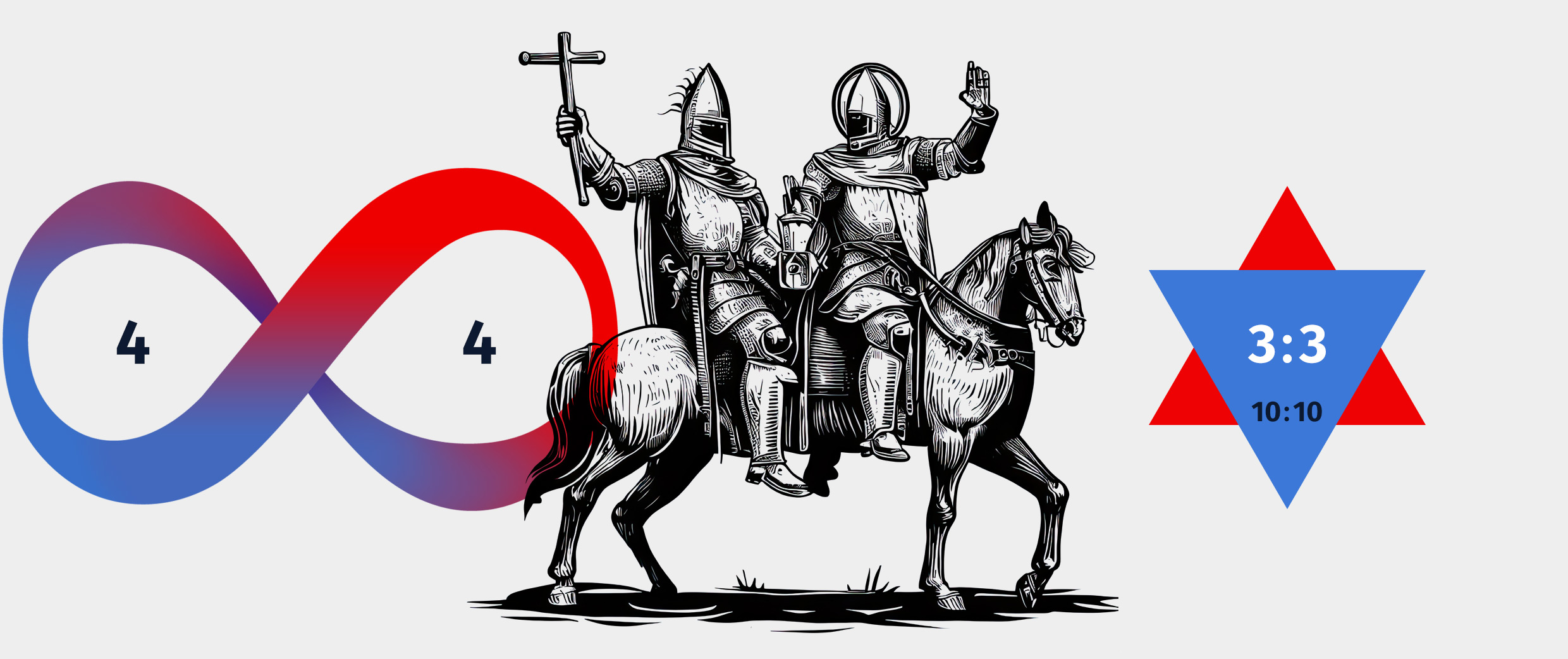
And in the context of the Alpha Games, it is important to understand: a star is that very third element in the Game Triad. It arises between two Game opposites, between black and white or blue and red, and fixes the outcome of the conflict — the very reason for which all this is done.
A star is not merely a social phenomenon, nor is it merely a symbol of power. It is a function of the system. It is one of the main tools of Alpha Players for manipulation, shaping society, culture, and human behavioral patterns. The Star emerges as the third element between two Game opposites — between black and white or blue and red, between artificially conflicting sides. From this, the Triad is born, and then the stellar pyramid: the center, the orbits, and the periphery.
It is important to understand one key thing:
- Stardom is not about talent.
Talent may or may not be present. It is not the determining factor.
What matters is the amount of attention focused on that figure.
If there is attention, there is a star.
If there is no attention, there is no star — even if the person is incredibly talented.
That is precisely why a star always functions as a mechanism.
It is a tool through which:
- public opinion is shaped,
- the value of things and ideas is distributed,
- the direction of millions of people’s behavior is set.
People look at a star — and begin to copy their style, views, and desires.
People listen to a star — and begin to repeat their words.
People look to the star — and build their lives around this model.
A star is not just a participant in the system.
A star is an element of control.
And here is the most important point:
- A star always exists only within a structure.
There are no stars outside the system.
There are simply people — with their own skills, experience, and capabilities.
But as soon as a system emerges, a distribution of roles immediately follows.
And at the top of this structure, a star inevitably emerges.
Therefore, when we say “star”, we are not referring to a specific individual.
We are talking about a mechanism. The very mechanism that repeats itself in all spheres of life: in politics, economics, culture, science, and even religion.
And in the next stage, we will see how this mechanism is reinforced not only through people but also through a visible symbol — the five-pointed star.
2. The Star as a Social Mechanism (Hierarchy and Psychology)
Thus, in the context of the Alpha Games, the star emerges as a third element between two opposites — between black and white or blue and red. This is precisely how the Triad emerges, and subsequently the stellar pyramid, in which the center, orbits, and periphery are arranged according to a predetermined logic.
If a star is a position, then the question arises: how exactly does it function within society?
No social system is organized chaotically. It is always structured around centers. And these centers are stars.
Imagine a simple but very accurate model:
-
at the center — a star;
- around it — the innermost orbits: those directly connected to the star, supporting it and receiving some of its light;
- further out — wider circles;
- and on the periphery — the majority of people who observe this structure, consume it, and imitate it.
This is how the classic pyramid is formed.
Not through talent.
Not through truth.
But through the distribution of attention.
Whoever is in the center of attention becomes the apex. Whoever loses attention loses their position.
And this is where psychology comes in.
By nature, people are drawn to the star. We want to be close to it. We want to become it. We copy its behavior, style, values, even desires.
Why does this happen?
Because the human mind struggles to distinguish between what we experience in reality and what we experience in our imagination. When we look at a celebrity, it’s as if we’re living through their victories, their love, and their success. It’s as if we ourselves become part of that glamorous life. And then we return to our own reality and continue to model our lives after that example.
In this way, a star becomes more than just a celebrity — they become a template for life for millions.
And this is a self-perpetuating cycle:
- the star receives attention →
- attention reinforces their status →
- the reinforced star receives even more attention.
And the cycle repeats.
It’s important to understand: this hierarchy isn’t formed from the bottom up, but from the center. First, a focal point of attention emerges — and only then does the entire system build up around it.
We think we choose for ourselves who to look at. But in practice, our attention is already directed. We’re shown the center — and we start looking at it.
This mechanism works everywhere:
-
in politics and the military — around key figures;
- in the economy — around brands and market leaders;
- in culture — around artists and influencers;
- even in science and education — around authorities.
And in every case, the same principle applies:
-
a star at the center → orbits of support → the masses who consume and copy.
If you remove this central point, the structure begins to fall apart. If you create a new star, the structure emerges almost automatically.
That is why a star is not merely a decoration of society.
It is its foundational element.
It is a tool through which the system controls people’s attention, values, and behavior.
Now let’s see how this mechanism manifests in the visible world — through the symbolism of the star, which we encounter literally at every turn.
3. The Symbolism of the Star in the Modern World
Now that we understand that a star is, first and foremost, a mechanism, let’s see how this mechanism is embedded in the world around us.
Let’s start with the most obvious example.
More than 40% of the flags of all countries in the world, past and present, feature stars. The vast majority of these are five-pointed. But its dominance is truly evident in the military. Today, this “symbol of authority” is officially featured on the uniforms of 95 out of 193 UN member states, and historically, it has been used by at least 111 countries. The symbol’s influence is absolute: within the G20, the five-pointed star adorns the epaulets of the military in 58% of member states. This encompasses nearly the entire upper echelon of global players — and is no longer a regional peculiarity, but essentially a universal symbol with truly global reach.
Stars in heraldry, stars in accompanying state symbols.
And almost all of them are five-pointed.
We literally live inside a stellar kaleidoscope.
Stars surround us everywhere:
- On national flags,
- In politics,
- In business and brands,
- In culture, film, music, and sports.
The most prominent are the so-called “show business stars”: actors, singers, influencers.
Hollywood’s Walk of Fame, with its stars embedded in the sidewalk, is no longer just a tourist attraction. It is a true temple of the modern Game.
Society is structured in such a way that a person’s status in society is increasingly determined by their stardom.
The brighter you “shine” — the higher your status.
The more attention you attract — the more valuable you are considered.
The symbol of the star works very precisely here.
It reinforces the mechanism on a visual level.
When we see a star at the top — on a flag, a company logo, an award, or a building facade — our brain automatically interprets it as:
-
“This is the center. This is the top. This is what we need to focus on”.
This is no coincidence.
This is the language of the Game that Alpha has been using for thousands of years.
Look around:
-
Stars on the flags of the US, China, the USSR, the European Union, and dozens of other countries.
- Stars in the logos of major corporations.
- Stars as a symbol of success in the entertainment industry.
- Even “star” status on social media — likes, followers, views.
All of this is not just pretty pictures.
It is visual confirmation of the social hierarchy.
The symbol of the star tells us: “There are those who shine at the center, and there are those who look up at them from below”.
Thus, an ancient symbol has become a modern tool.
It constantly reminds people of their place in the pyramid and, at the same time, compels them to strive to rise higher — that is, to become brighter, more noticeable, more “star-like”.
Now let’s delve deeper and see where this symbol actually came from and why it has remained so enduring over the millennia.
4. Historical Roots
The roots of celestial symbolism trace back to Mesopotamia and Ancient Egypt — to the origins of the Game, around 3500–3000 BCE.
For ancient people, the sky was not merely a dome overhead. It was perceived as a blueprint of all reality — as a model of the universe.
Here, it is important to understand the psychology of that time, especially in the context of the Game. People did not separate myth from observation: the heavenly world and the earthly world seemed to them to be mirror images of one another. If there are bright celestial bodies in the sky, then there must also be prominent figures on earth. If there is the Sun as the highest point of light, then there must also be many smaller celestial bodies. Just as on earth there is a pharaoh, a king, an elite, ordinary people, and so on.
Therefore, ancient cosmology was not an abstraction, but an attempt to understand the world through direct observation. People saw the repetition of cycles — day and night, birth and death, decline and rebirth — and synchronized myth, symbol, and social order with this.
It was precisely because of this mirroring that a star came to be perceived not as a random sign, but as a natural element of the universe: where there is a top, there is a bottom; where there is light, there is darkness; where there is death, there is life; where there is the Sun, there are also many small stars.
But here a more precise scheme emerges — the scheme of the Triad.
The ancients divided the world into three Play Zones:
- Above the Earth — the manifested, diurnal, “white” pole;
- On Earth — the zone of result fixation and control;
- Beneath the Earth — the hidden, nocturnal, “black” pole.
In this logic, the Player does not belong to just one side. He is triune by nature. He can act in both the white and black phases, but his true position is at the center, in the zone of the star.
The five-pointed star is a symbol of the human being: the head and four limbs. And that is why it conveys this model so accurately.
When the Player acts in the manifest phase, the star stands with its point upward. When he transitions to the hidden, inverted phase of control, the star flips over.
An inverted star is not necessarily “evil” in a moral sense. It is precisely an inversion, a phase shift. We see the same mechanism in the celestial bodies: the Moon changes its illuminated side, the Sun travels from sunrise to sunset. It is the same rhythm — just in different states.
Therefore, the two stars — the upright and the inverted — do not represent a struggle between two different entities. It is a graphic representation of a single triadic structure that holds both poles and the center simultaneously, changing phases depending on the tasks of the Game.
In Egyptian hieroglyphs, the star signified “star” and “morning” (N14), while the star within a circle was associated with the afterlife, the Duat (N15).
In Mesopotamia, various forms of stars existed in parallel: four-pointed stars — as the symbol of the sun god Shamash — and eight-pointed stars — as the symbol of Ishtar/Inanna, often in the form of two superimposed four-pointed stars, which in itself illustrates the principle of duality. Early five-pointed symbols also appear during this period.
The mythology of those civilizations formed the core of game symbolism: the circle as an eternal cycle, the solar arc as a bridge between beginning and end, the lunar cycle as an inversion of phases, the star as a sign of chosenness and the hierarchy between the world of the living and the world of the dead.
This ancient foundation has not disappeared. It has survived to the present day and continues to function: the star at the top — as a sign of the summit and the center of attention.
5. Star Shapes (Geometry and Meaning)
Alpha works with various geometric star shapes — and each one adds its own layer of meaning to the game.
In the modern world, the five-pointed star remains the most straightforward and recognizable: it symbolizes humanity. It is no coincidence that the numerical metaphors of the Game are built around it: 5, 15, 25, and so on.
-
5 is the star itself.
- 15 is a vertical star.
- 25 is two stars, one on the black field and one on the white field.
Other star shapes also carry their own meaning.
The three-pointed star symbolizes the classical Triad. Take a look at the Mercedes logo.
The four-pointed star is associated with the Sun, the vertical and horizontal axes, the four cardinal directions, and power. The cross within a circle is one of the Game’s primary symbols.
The eight-pointed star, as a symbol of Ishtar/Inanna, is often constructed from two superimposed four-pointed forms, in a 4x4 pattern, and in itself illustrates the principle of duality.
Six-pointed and other variations reinforce the themes of the Triad, divinity, and hierarchy.
The number of rays was never random: it set the context within the Game.
The inverted star in this series is a special geometric phase. It arises through a 180-degree rotation and shows the same shape in a different position: not a new entity, but another phase of the same symbol.
Thus, the different forms of the star create a unified visual language for the Game: from the image of a human to the code of duality, the triad, the cycle, hierarchy, and numerical structure.
6. The Star in Religion and Esotericism
The five-pointed star did not disappear in antiquity. It continued to live on in religious and esoteric traditions, where it similarly functions as a enduring symbol of power, the duality of the Game, and initiation.
We see it in Freemasonry — as the “Blazing Star” — in the Hermetic Order of the Golden Dawn, in the Order of the Eastern Templars or the Order of the Temple of the East (Ordo Templi Orientis), in Wicca, as well as in the Church of Satan and The Satanic Temple, where the inverted pentagram is particularly prominent.
It is important to understand: despite their outward differences, all these structures follow the same basic logic. They share a common symbolic language, common internal mechanics, and a unified framework. They may argue among themselves, but they are more like different factions within a single system — like political parties in a national legislature within a single state.
Therefore, the star in religion and esotericism is not a random symbol. It is a continuation of an ancient mechanism that reinforces the idea of a center, a summit, a transition, and opposites.
And later we will see how this same mechanism operates in the modern world — especially in cinema, where the star becomes not a symbol, but a product of the system itself.
7. Fake Stars: Bloggers and Pseudo-Experts
Now let’s take an honest look at how this same “star” mechanism works on the internet today.
The system is very effective at creating new “stars” — bloggers and pseudo-experts who rack up millions of views and pose as whistleblowers.
They talk about Freemasonry, Satanism, secret societies, UFOs, aliens, ancient artifacts, and the “hidden truth”. On the surface, this looks like thinking outside the box. But if you look deeper, almost none of them reveal the mechanics of the Game itself: how the hierarchy of attention is constructed, how the pyramid is maintained, and exactly how propaganda works.
In reality, most of these bloggers are Alpha players whom the system itself deliberately promotes and elevates to the top of the star pyramid. Their task is to channel the attention and emotions of millions of people, to create the illusion of analysis and exposure, while avoiding any discussion of the Game’s mechanics themselves.
As a result, the audience is shown external effects — symbols, sensationalism, mysticism, and fantasy. Attention does not leave the system but simply shifts to a new star.
The example of UFOs is particularly telling. Essentially, this is a modern repackaging of ancient myths about gods (Players) who descended from the heavens. The Players took the old structure — gods, angels, higher beings — and turned it into a fantastical narrative about visitors from other planets. In other words, within the Game, they simply shot a new movie and passed it off as reality.
This is where the continuity becomes apparent: myths were the precursors to this narrative, and UFOs have become its modern form. The meaning remains the same; only the packaging has changed.
It turns out to be quite cynical. People think they are “waking up” and leaving the system, but in reality they are simply moving into a new, more exciting orbit around yet another star.
I’m doing this show for a different reason.
I’m not creating yet another alternative star.
My task is to dissect the mechanism itself: how the star works, how the hierarchy of attention is formed, and how propaganda keeps people inside the Game.
Until this structure is seen, any “exposés” remain part of the same spectacle.
A star is a star.
It doesn’t matter what costume they’re wearing — a tuxedo on the red carpet or a “whistleblower” hoodie.
The mechanics remain the same.
8. The Movies as a Star Factory
If you want to see the mechanics of stardom in its purest form, look to the movies.
The movies are one of the most powerful factories for producing stars.
Audiences almost never go to see a movie.
They go to see a star.
This is often why we say “a movie with Leonardo DiCaprio” or “with Margot Robbie”, rather than simply “a movie”. Actors are cultivated separately: financially, in the media, and symbolically. A person ceases to be an individual and becomes a bearer of status.
Through the screen, the viewer is given an illusory experience: someone else’s life, someone else’s victories, someone else’s success. The mind cannot distinguish the imaginary from the real — and the star becomes a model of how “one should live”.
Now let’s see how the films themselves depict this.
-
“The Substance” (2024) is one of the harshest dissections of the mechanics of stardom. The film literally begins with the installation of a star on the Walk of Fame and ends with a scene where the protagonist’s brains spill out over that very star. The entire visual cycle encapsulates the entire philosophy of stardom in a single film. The logic is simple: a star is not a reward, but a condition of existence. Lose your “glow” — you vanish.
- “Sunset Boulevard” (1950) is the story of a “dead star”.
Norma Desmond lives off her past status as if it were a religion. Her line, “I’m a big star; it’s the movies that have gotten small”, is an accurate description of the mechanics.
- La La Land portrays Hollywood as an artificial sky.
Dreams flare up and fade away, and personal life always takes a back seat to star status.
- “The Hunger Games” (2012–2015)
Here, stardom is a matter of life and death.
Before sending the children into the arena, they are transformed into stars: stylists, interviews, flashy costumes, and a carefully crafted image. This is necessary so that the audience can empathize with the figures on the board. The brighter you shine, the better your chances of survival. The main character ceases to be a person and becomes a symbol — the Mockingjay. Here, stardom is both armor and a prison.
And here, it’s important to grasp the main point.
Movies don’t just show stars.
They create them, amplify them, and use them to control the collective imagination.
Understanding this moment is a turning point.
It’s the moment when you stop looking up at the screen
and begin to see the very structure of the sky itself.
9. Conclusion: The Star = Illusion
Let’s summarize.
The star exists only within the Game.
Outside the system, there are no stars.
No idols.
No geniuses.
There are no figures to emulate or worship.
There are simply people — with their own abilities, experiences, and dignity.
The five-pointed star was originally an ancient symbol of humanity.
Alpha turned it into a tool for controlling attention, creating hierarchy, and managing the collective imagination. Through it, the system forces billions of people to look up, instead of looking at the structure itself.
The Game lacks two sides: black and white (or blue and red). It needs a third center. That is precisely why the star is not a decoration of the world, but its way of channeling conflict into power.
Understanding this mechanism is a crucial turning point.
It is the moment when you stop being a spectator in the stands and begin to see the entire stadium.
When you stop admiring individual bright lights in the sky and start seeing who lights them and why.
You either continue looking up at the stars from below,
or you begin to understand how this entire artificial structure works.
The choice is yours.
If you’ve seen the mechanics — you’ve already taken your first real step beyond the orbit.
A star is an illusion.
A person is reality.
Thank you for watching.



 Watch on YouTube (English version)